


Mali Terror: Can Violence Be Stopped After Minister's Death?
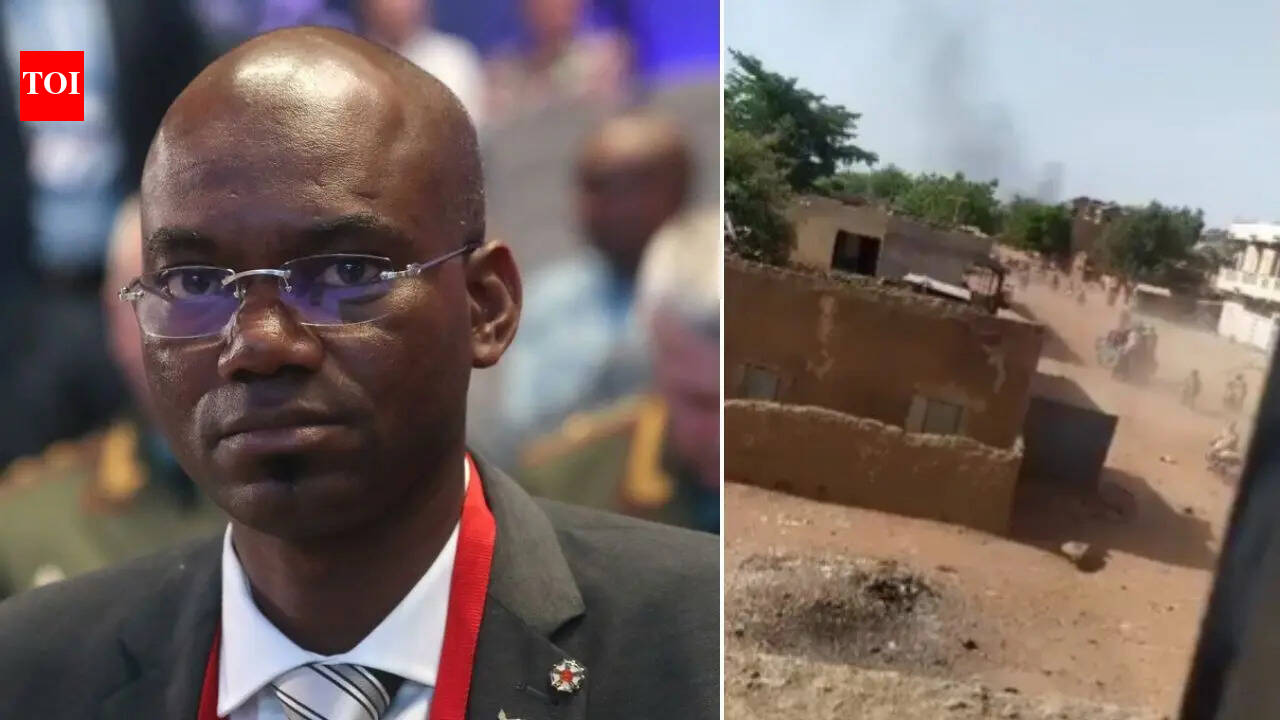
Mali's security crisis deepened with the killing of Defence Minister Sadio Camara in an attack on his residence.
Coordinated strikes by separatist fighters and Al-Qaeda-linked militants targeted Bamako and other cities, marking a significant escalation. The separatists confirmed an alliance with JNIM, complicating counterinsurgency efforts.
The attack on the Defence Minister's residence has raised concerns about the ability of the government to protect its citizens. The violence has displaced thousands of people, with many more living in fear of their lives.
The international community has condemned the attack, calling for an end to the violence and a return to peace talks.
The situation in Mali is complex, with multiple armed groups operating in the country. The government has struggled to assert its authority, particularly in the north, where separatist groups have been active for years.
The involvement of Al-Qaeda-linked militants has added a new dimension to the conflict, making it more challenging to resolve.Background to the Conflict
The conflict in Mali began in 2012, when separatist groups in the north of the country began to demand independence.
The situation escalated when Al-Qaeda-linked militants joined the fight, taking advantage of the chaos to establish themselves in the region. The international community intervened in 2013, with French troops leading a military campaign to drive out the militants.
Despite the intervention, the conflict has continued, with periodic outbreaks of violence. The government has struggled to rebuild and provide basic services to its citizens, particularly in the north.
The economy has suffered, and many people have been forced to flee their homes in search of safety.
The killing of the Defence Minister has raised fears that the conflict could escalate further, with more attacks on government targets and civilians.
The government has vowed to take action against those responsible, but it remains to be seen whether it has the capacity to do so.The Role of Separatist Fighters
The separatist fighters in Mali have been active for many years, demanding independence for the north of the country.
They have been involved in periodic clashes with the government, and have also been linked to Al-Qaeda-linked militants. The confirmation of an alliance with JNIM has raised concerns about the potential for further violence.
The separatist fighters have been able to operate with relative impunity in the north of the country, where the government has struggled to assert its authority.
They have been able to recruit new members and acquire weapons, making them a formidable force. The government has tried to negotiate with them, but so far, a lasting peace agreement has proved elusive.
The involvement of Al-Qaeda-linked militants has added a new dimension to the conflict, making it more challenging to resolve.
The militants have been able to take advantage of the chaos to establish themselves in the region, and have been responsible for numerous attacks on civilians and government targets.The International Response
The international community has condemned the attack on the Defence Minister's residence, calling for an end to the violence and a return to peace talks.
The United Nations has a peacekeeping mission in Mali, which has been working to support the government and stabilize the country. However, the mission has faced numerous challenges, including attacks on its personnel and equipment.
France has been a key player in the international response to the conflict, providing military support to the government and leading a regional counter-terrorism effort.
The United States has also been involved, providing financial and military aid to the government. However, the conflict has proved to be a complex and challenging one, and it remains to be seen whether the international community will be able to help bring about a lasting peace.
The African Union has also been involved in efforts to resolve the conflict, providing support to the government and facilitating peace talks.
However, the organization has faced numerous challenges, including a lack of resources and capacity.
The conflict has also had regional implications, with neighboring countries affected by the instability and violence.Why this Matters
The conflict in Mali has significant implications for the region and the wider world.
The country is a key player in regional affairs, and the instability and violence have had a ripple effect on neighboring countries. The involvement of Al-Qaeda-linked militants has also raised concerns about the potential for terrorism and extremism to spread.
The conflict has also had a significant humanitarian impact, with thousands of people displaced and many more living in fear of their lives.
The government has struggled to provide basic services, including healthcare and education, and the economy has suffered. The international community has a responsibility to help support the government and people of Mali, and to work towards a lasting peace.
The killing of the Defence Minister has raised fears that the conflict could escalate further, with more attacks on government targets and civilians.
The government has vowed to take action against those responsible, but it remains to be seen whether it has the capacity to do so.
The international community must continue to support the government and people of Mali, and work towards a lasting peace.The Human Cost
The conflict in Mali has had a devastating human cost, with thousands of people killed or injured.
Many more have been displaced, forced to flee their homes in search of safety. The government has struggled to provide basic services, including healthcare and education, and the economy has suffered.
The humanitarian situation in Mali is dire, with many people in need of assistance. The international community has provided significant support, but more is needed to address the scale of the crisis.
The government must also do more to support its citizens, including providing basic services and protecting them from violence.
The conflict has also had a significant impact on the social fabric of the country, with communities divided and trust broken. The government must work to rebuild trust and promote reconciliation, including through dialogue and mediation.
The international community must also support these efforts, including through the provision of technical assistance and funding.What Happens Next
The killing of the Defence Minister has raised fears that the conflict could escalate further, with more attacks on government targets and civilians.
The government has vowed to take action against those responsible, but it remains to be seen whether it has the capacity to do so. The international community must continue to support the government and people of Mali, and work towards a lasting peace.
The government must also take steps to address the underlying causes of the conflict, including poverty, inequality, and lack of access to basic services.
This will require significant investment in development and reconstruction, including in the north of the country. The international community must support these efforts, including through the provision of funding and technical assistance.
A lasting peace in Mali will require a comprehensive approach, including military, political, and humanitarian components. The government and international community must work together to support the government and people of Mali, and to address the root causes of the conflict.
This will require patience, persistence, and a long-term commitment to peace and stability in the region.A Path Forward
A path forward for Mali will require a coordinated and sustained effort from the government and international community.
The government must take steps to address the underlying causes of the conflict, including poverty, inequality, and lack of access to basic services. The international community must support these efforts, including through the provision of funding and technical assistance.
The government must also work to rebuild trust and promote reconciliation, including through dialogue and mediation. The international community must support these efforts, including through the provision of technical assistance and funding.
A lasting peace in Mali will require a comprehensive approach, including military, political, and humanitarian components.
The killing of the Defence Minister has raised fears that the conflict could escalate further, with more attacks on government targets and civilians. However, it has also created an opportunity for the government and international community to come together and work towards a lasting peace.
With patience, persistence, and a long-term commitment to peace and stability, it is possible to create a brighter future for the people of Mali.
0 Comments:
Post a Comment